Category
Services
Client
Year
Introduction
Background
Vehicle workshops in Indonesia often face challenges in recording transactions, managing inventory, and tracking vehicle service history. Many workshop owners still use manual methods such as notebooks or spreadsheets, which can lead to lost data, inaccuracy, or difficulty in access.
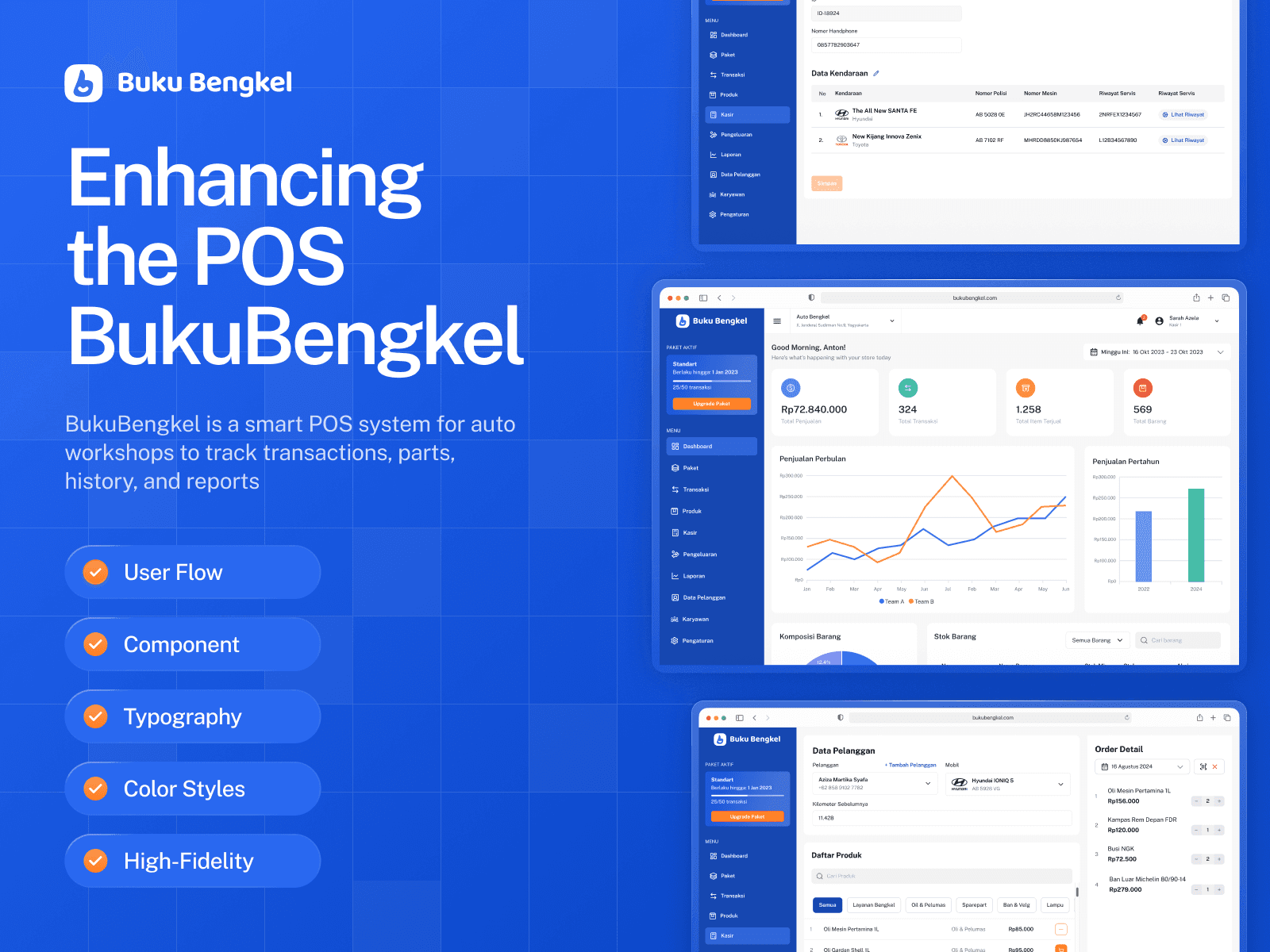
BukuBengkel is a digital solution that helps workshop owners digitize their business with features for transaction recording, spare parts inventory, service history tracking, and revenue reports.
Problem Faced
Difficulty in recording transactions neatly
Many workshop owners still use manual records that risk being lost and are difficult to organize.Difficulty in tracking inventory
No easy-to-use system to manage spare parts stock with real-time updates.Lack of service history for vehicles
Workshop owners and user struggle to access past repair and service details.Difficulty in viewing revenue reports
Financial reports are poorly documented, making business decision-making difficult.
My Role
As the UI/UX Designer, I was responsible for:
Conducting research and user interviews to understand workshop owners' pain points.
Designing wireframes and high-fidelity prototypes for a seamless user experience.
Collaborating with developers to ensure smooth implementation of designs.
Conducting usability testing and iterating based on feedback.
Timeline
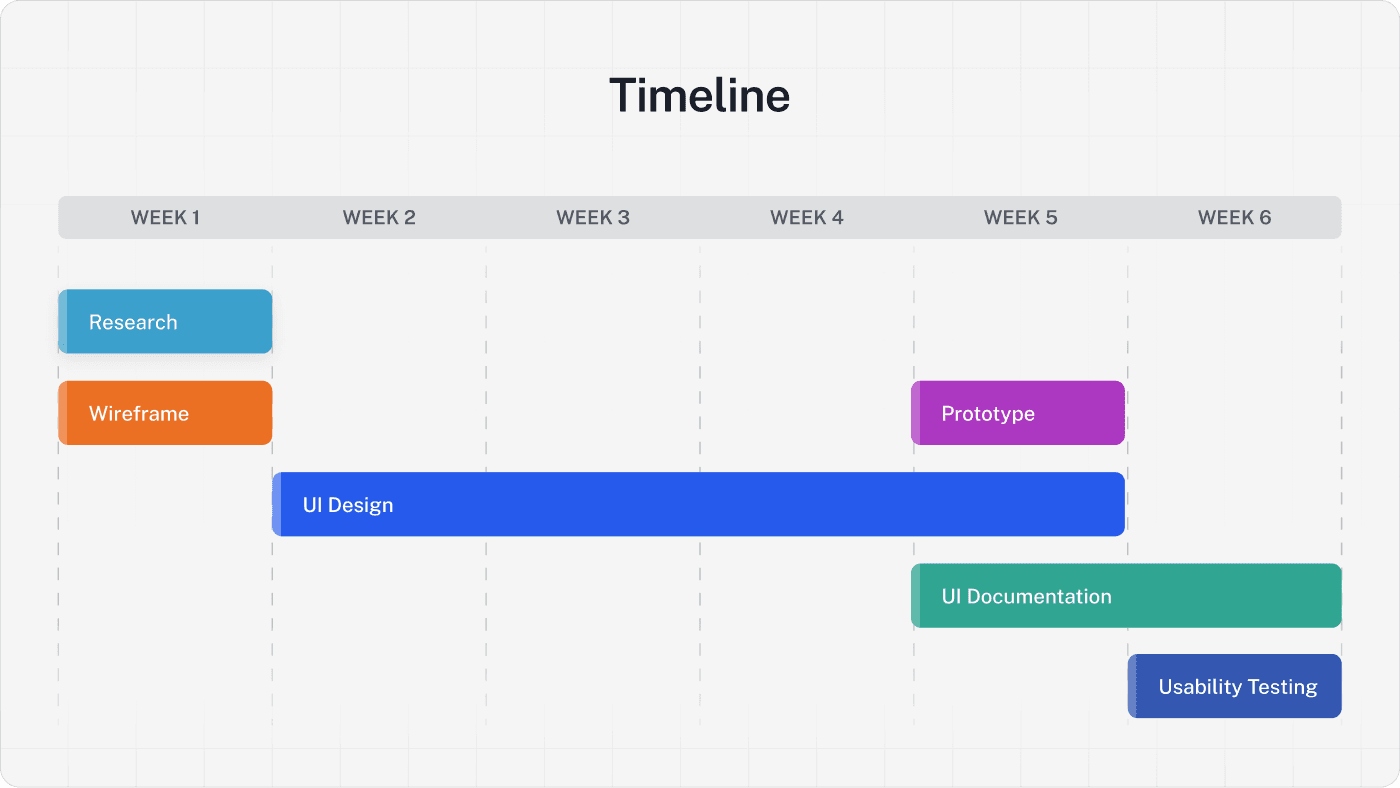
The project timeline spans 6 weeks, utilizing a sprint methodology where each week is dedicated to specific tasks. At the end of each week, we review the progress made in the previous sprint, allowing us to adapt and refine our approach as needed.
Research & Analysis
Research Method
In-depth interviews with 3 workshop owners to gain insights into their challenges.
Competitive analysis to examine existing solutions and how BukuBengkel can offer an advantage.
Research Findings
80% of workshop owners still use manual records.
65% struggle with tracking spare parts stock accurately.
75% consider financial reporting essential for business growth.
60% of workshop customers frequently ask for service history, but workshop owners find it hard to retrieve information quickly.
Problem Definition
How can we help workshop owners digitize transaction records, inventory, and business reports easily and efficiently?
Competitive Analysis
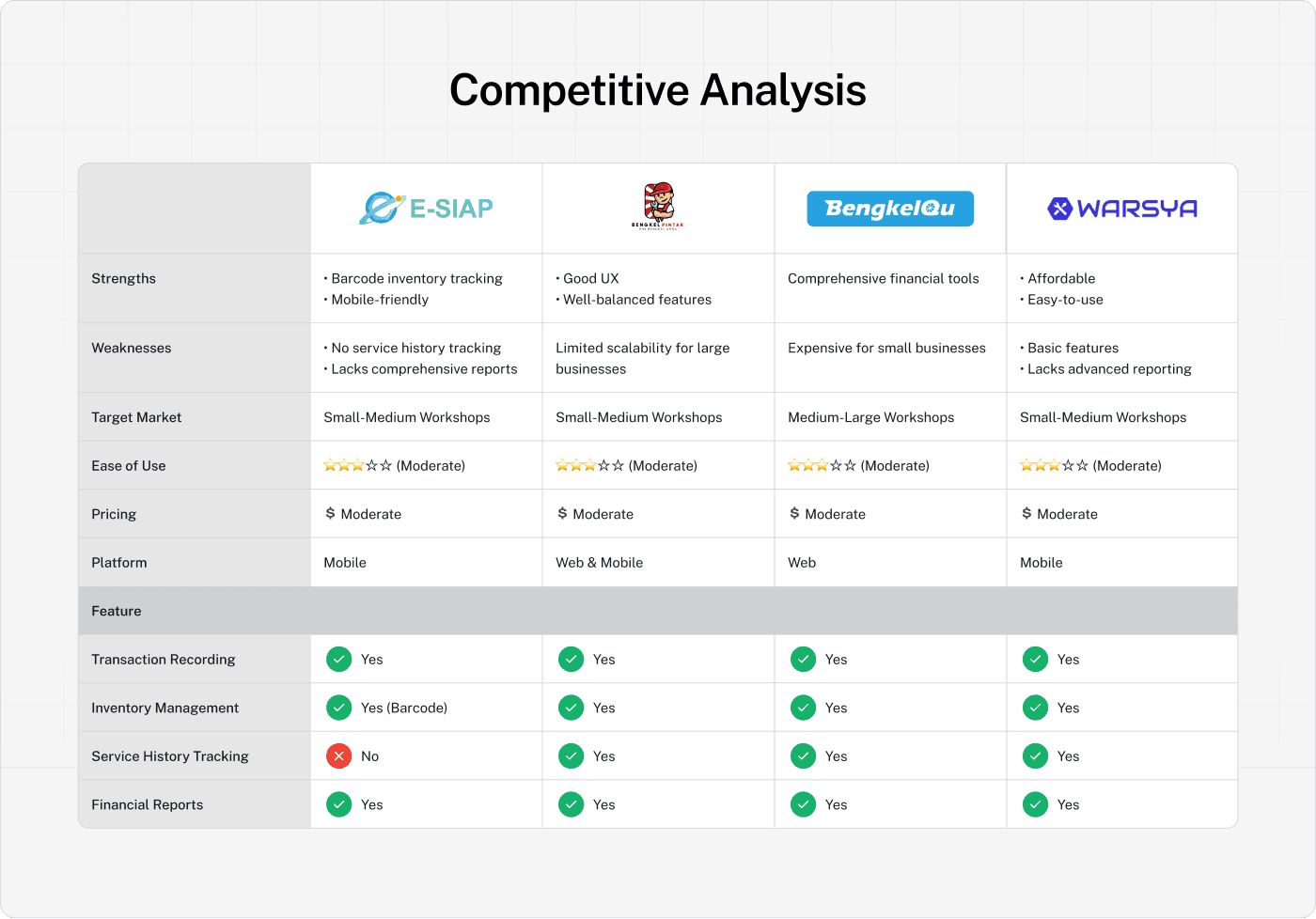
To better position BukuBengkel in the market, we analyzed existing solutions. we conducted an in-depth competitive analysis of several popular workshop applications in Indonesia, such as E-Siap, Bengkel Pintar, BengkelQu and Warsya.
This analysis aims to identify key features, strengths, weaknesses, and target users of these competitors. By examining their transaction processes and product management flows, we can gain valuable insights into best practices and potential areas for improvement.
This approach not only helps us design a more intuitive and efficient user experience for BukuBengkel but also ensures that our development efforts are feasible and aligned with user expectations.
Key Insights from the Comparison:
Competitors lack a complete solution. BukuBengkel offers an all-in-one system including service history tracking, which some lack.
Pricing is a differentiator. BukuBengkel is positioned as an affordable alternative without compromising key features.
Opportunities for improvement. Barcode-based inventory tracking (from E-Siap Bengkel) could be considered for future iterations.
Based on this competitive analysis, BukuBengkel stands out by offering an all-in-one, user-friendly, and affordable solution for small to medium workshop owners. With these insights, we move forward with the design phase, focusing on creating an intuitive experience that meets users' specific needs
Solution & Design
Design Process
We followed a user-centered design approach, ensuring that every feature was built based on real user needs. The process included:
Empathize – Conducting research to identify user pain points.
Define – Formulating clear problem statements from our findings.
Ideate – Brainstorming potential solutions and prioritizing key features.
Prototype – Creating low-fidelity and high-fidelity prototypes.
Test – Conducting usability tests and iterating based on feedback.
Determining an Efficient User Flow
To ensure a seamless user experience, we analyzed different possible user flows and identified the most efficient one based on:
Minimizing user steps to complete key actions.
Ensuring intuitive navigation so workshop owners can quickly access necessary features.
Optimizing the transaction process for faster recording and easy retrieval of records.
Finalized User Flow
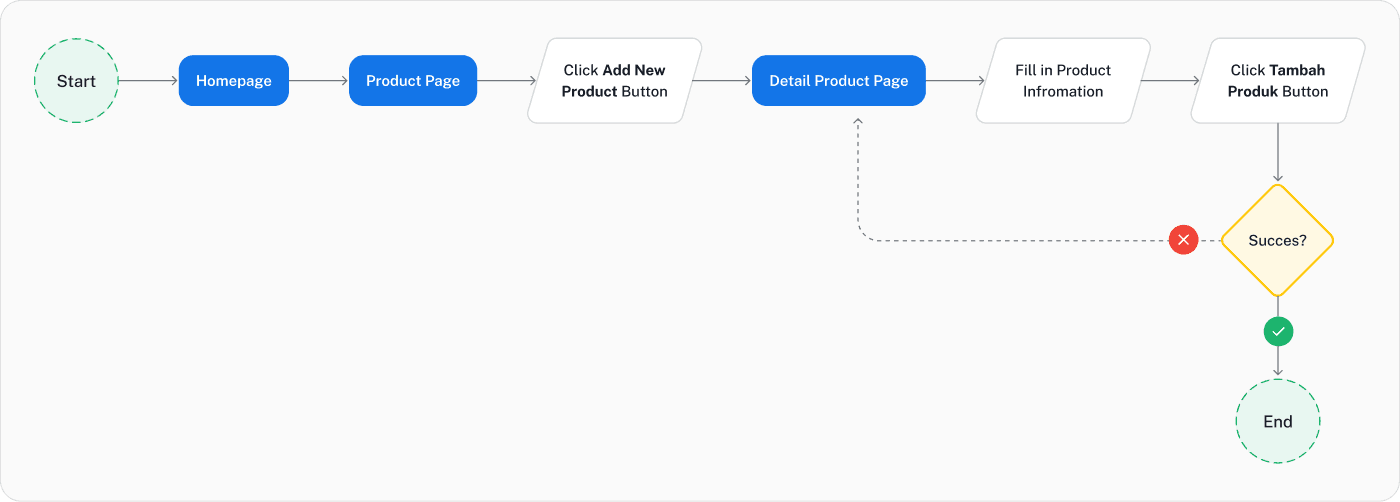
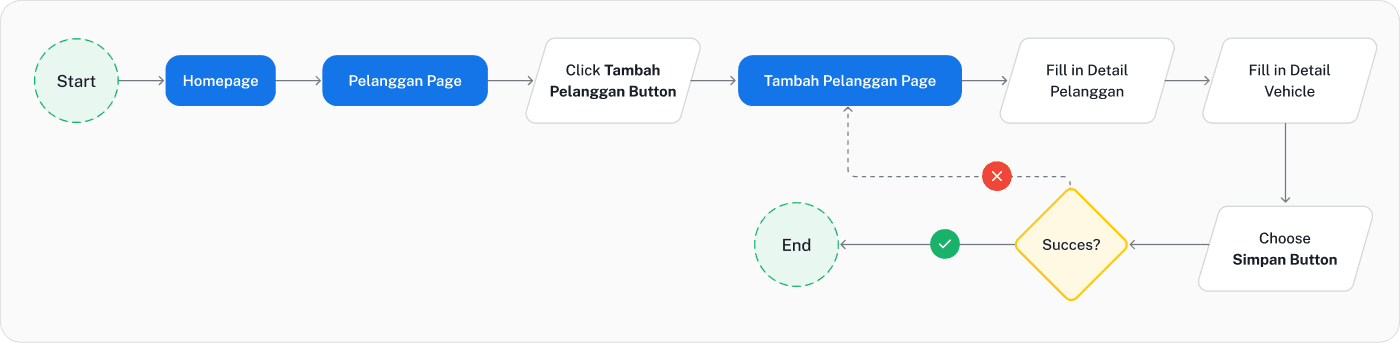
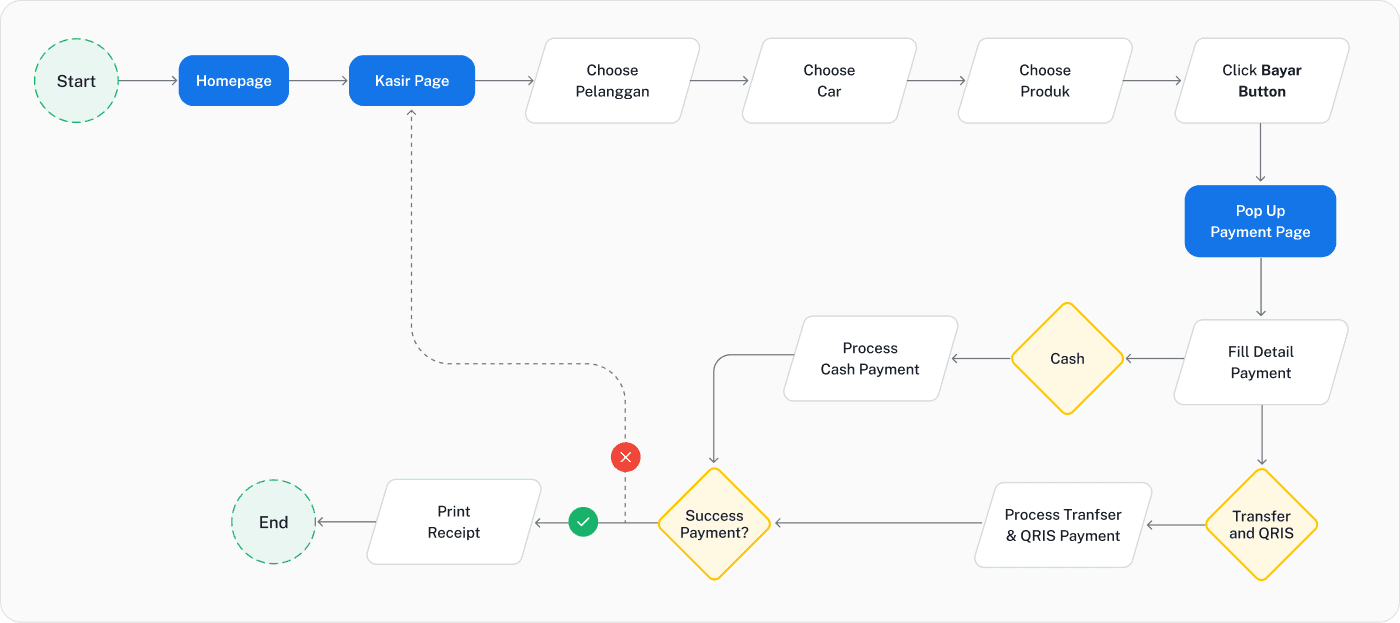
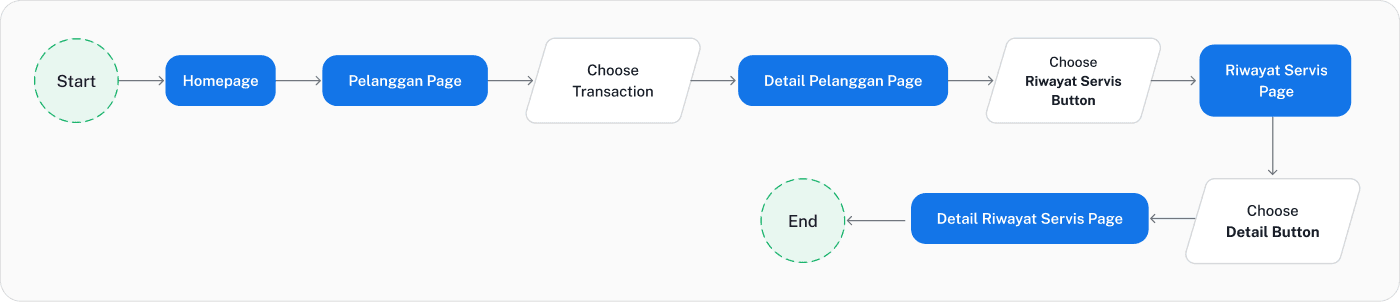
The user flow was designed to ensure smooth navigation through the application. Below is the simplified user flow:
a. User Flow Tambah Produk
b. User Flow Tambah Pelanggan
c. User Flow Transaksi
d. User Flow LihatRiwayat Servis
With a clear understanding of the competitive landscape and an efficient user flow in place, we designed BukuBengkel to offer the most seamless and efficient experience for workshop owners. The next step involves designing an interface that aligns with their workflow.
Key Features
BukuBengkel provides the following key features:
Transaction Recording – Digitalized system for recording transactions efficiently.
Inventory Management – Real-time tracking of spare parts stock.
Service History Tracking – Detailed logs of past services and repairs.
Financial Reports – Comprehensive reports with charts and analytics.
User-Friendly Dashboard – A streamlined, intuitive interface for managing workshop operations.
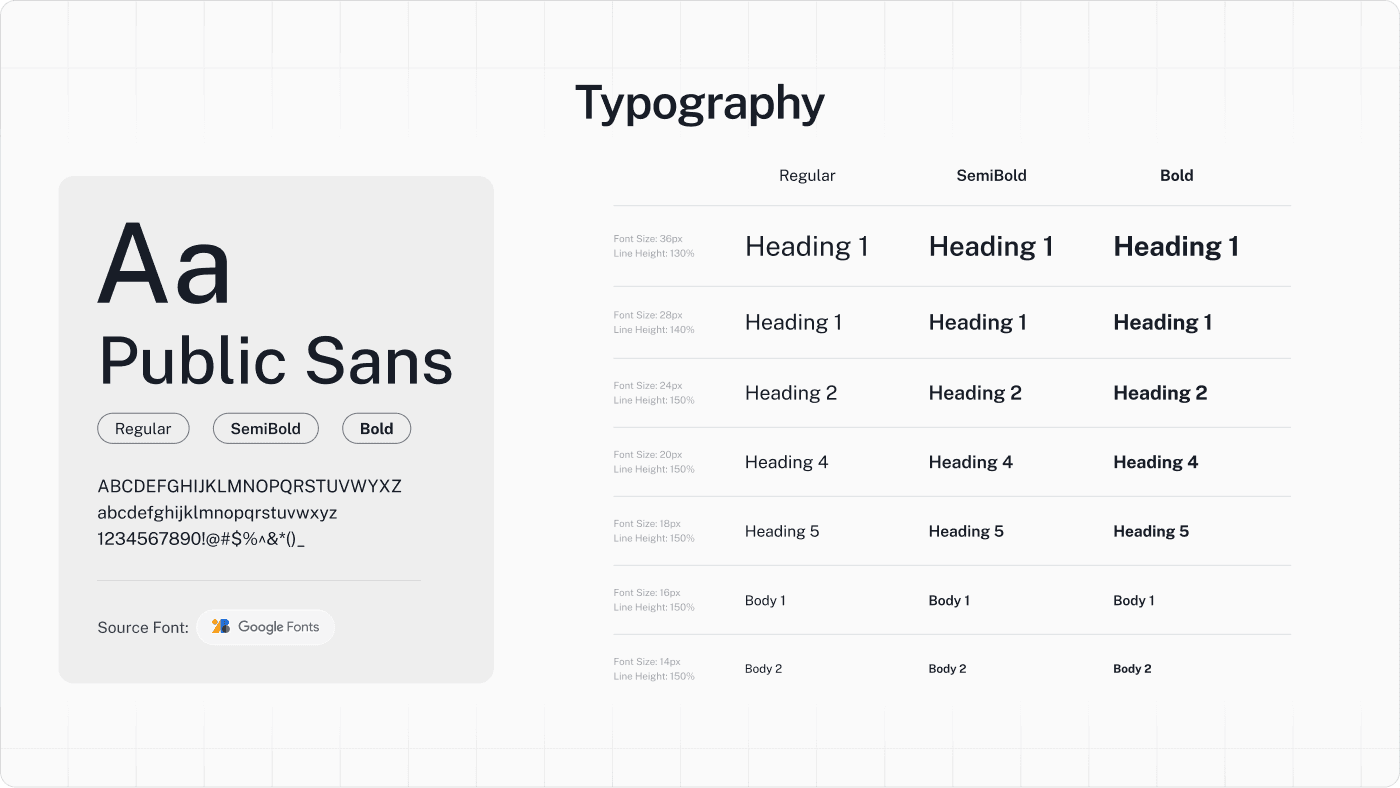
Typography
We chose Public Sans for its readability, modern look, and professional appeal. As an open-source font from Google Fonts, it ensures accessibility for developers.
Color Styles
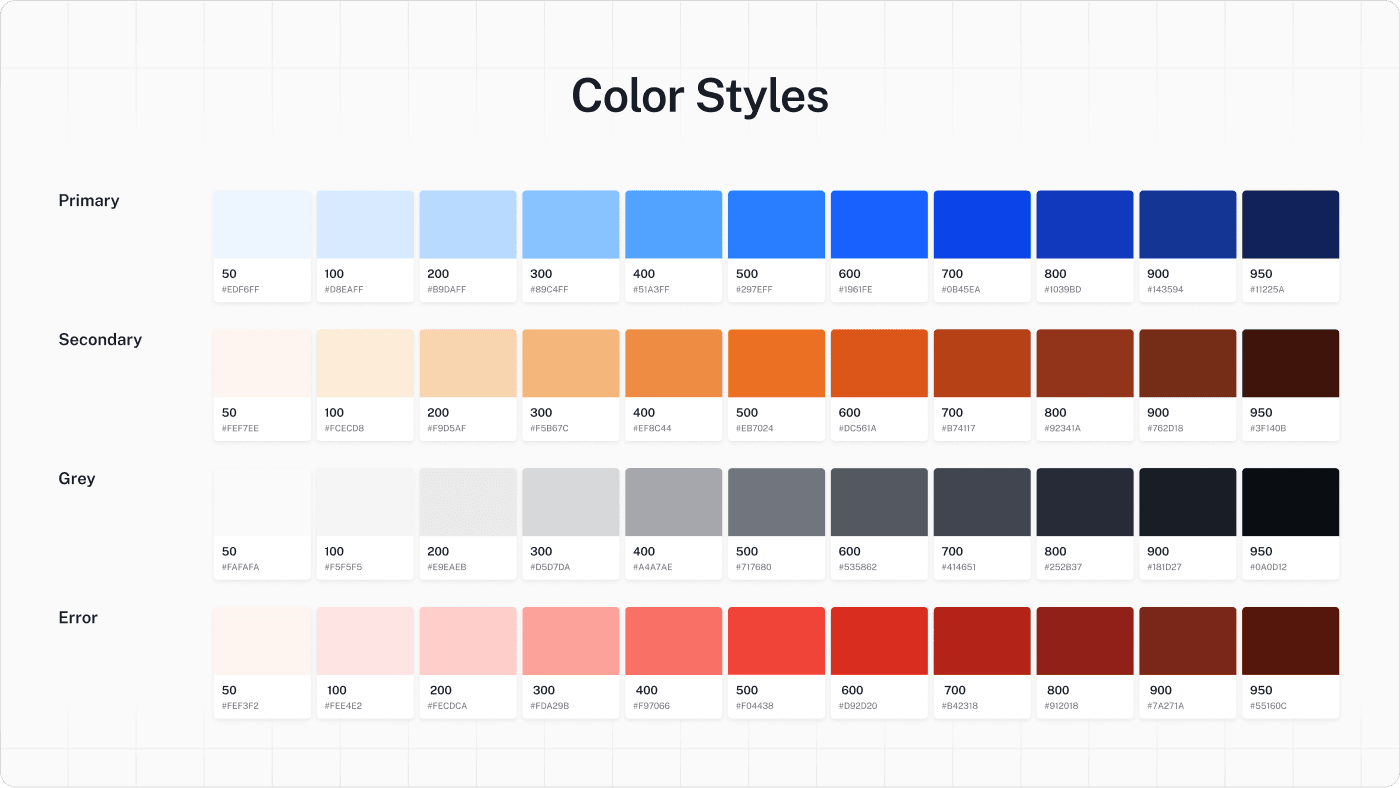
A modern blue serves as the primary color, reflecting professionalism and trust. The color scheme follows Tailwind CSS shades ranging from 50 to 900 to provide visual depth
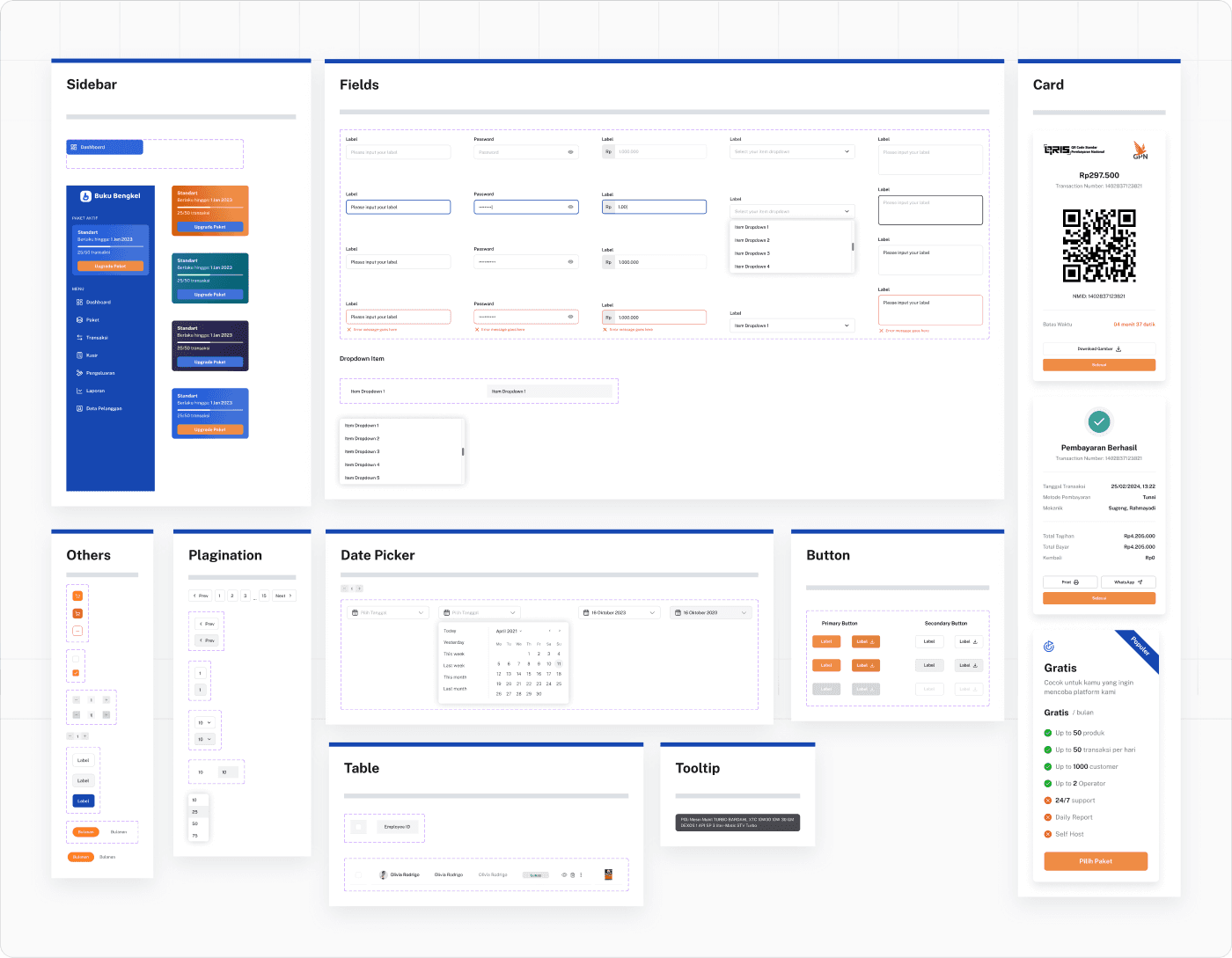
Components
UI Design
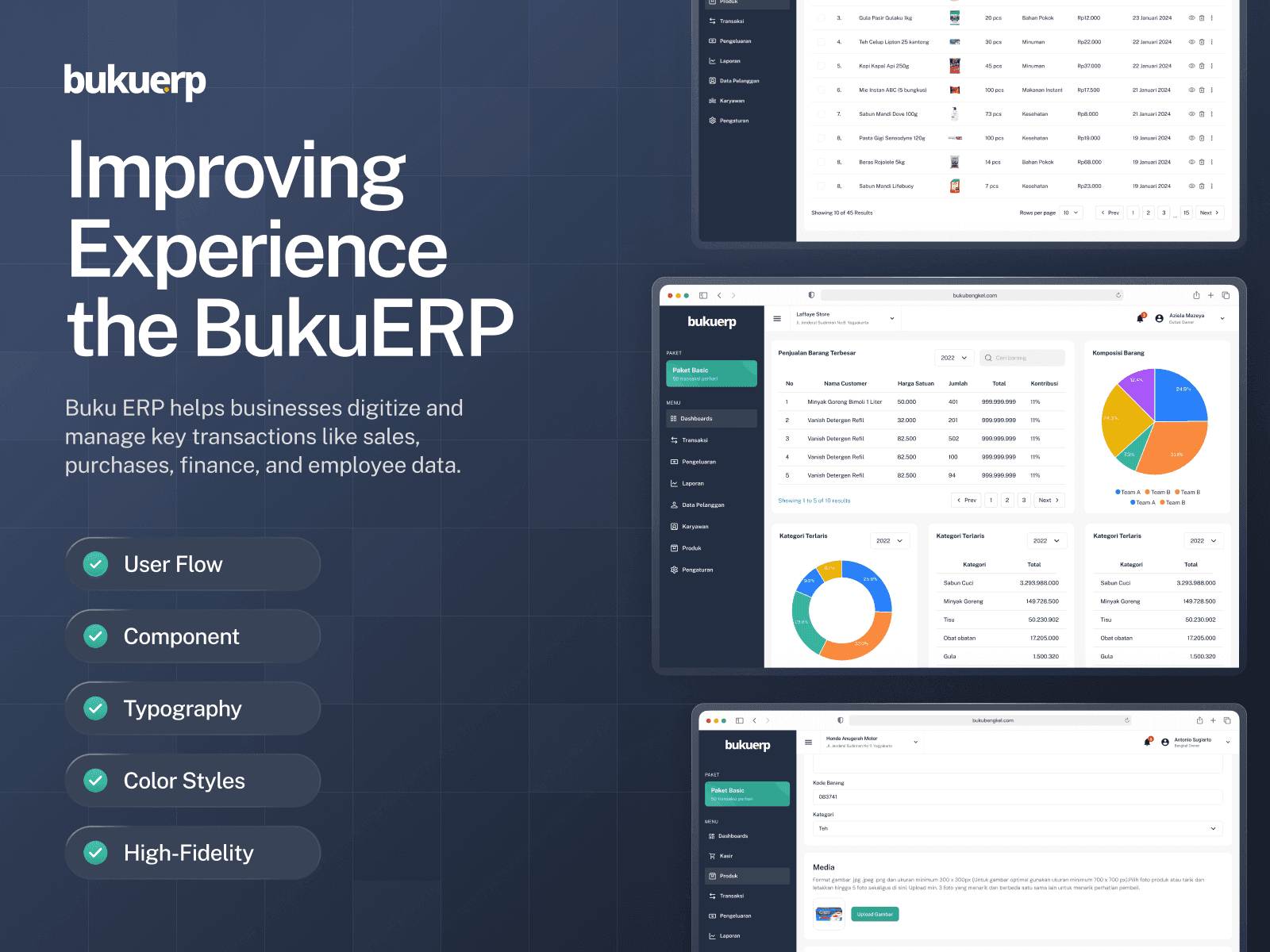
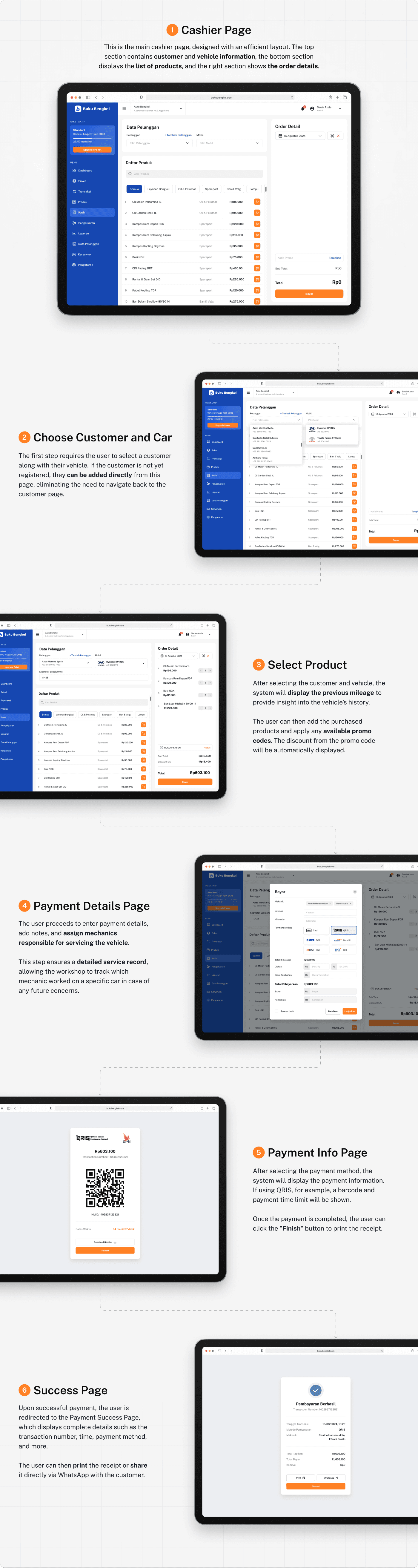
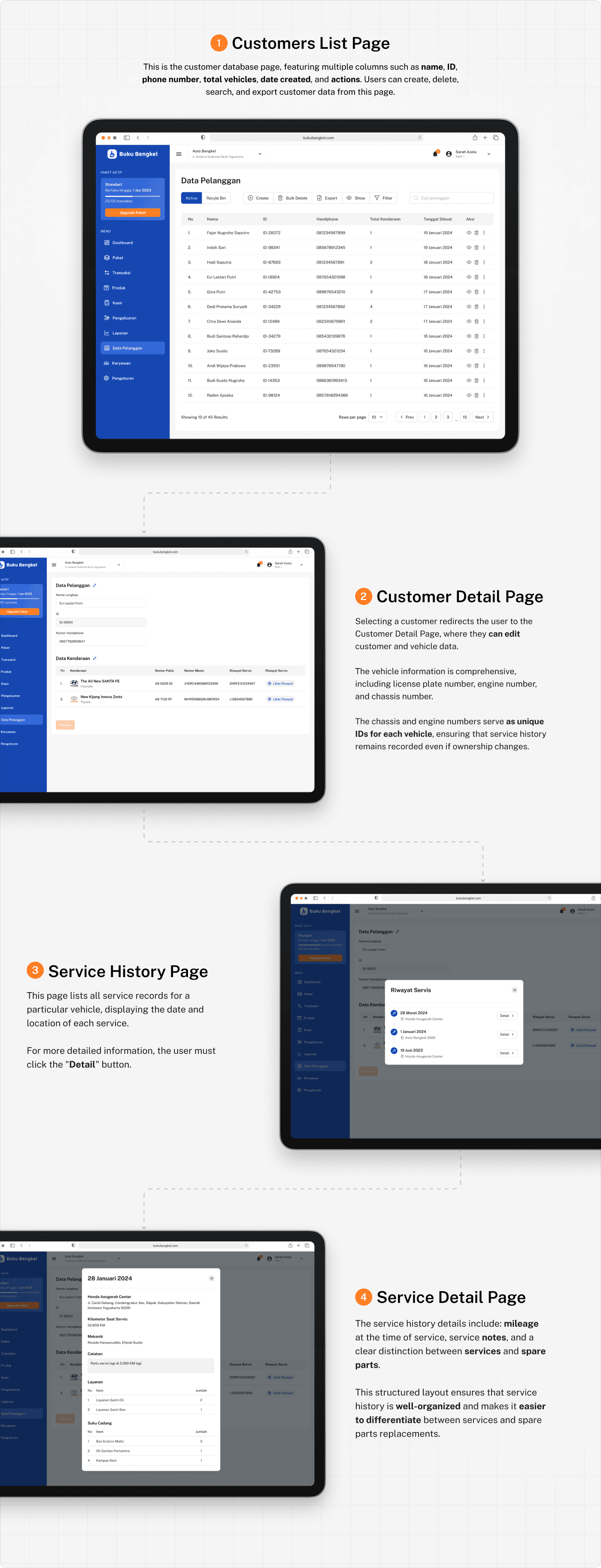
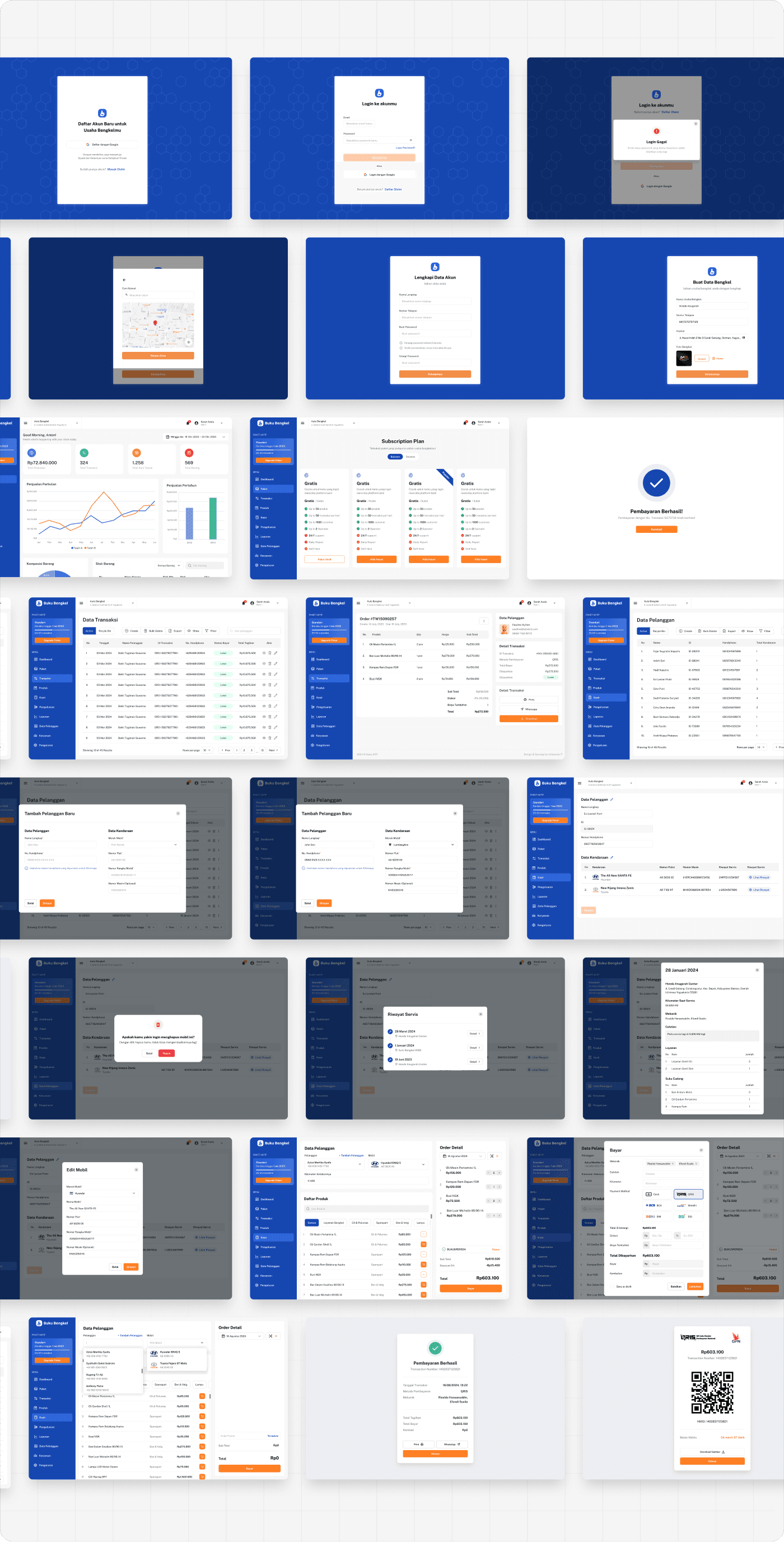
The UI designs developed for Buku Bengkel focus on enhancing user experience through intuitive layouts and clear navigation. Each design element is crafted to ensure usability and aesthetic appeal, aligning with the overall goals of the project
a. Transaction and Payment
b. Viewing Service History
c. Some other page design results
Usability Testing
Usability testing was conducted with a group of 10 participants, including both existing users and potential new users. Each participant was tasked with completing specific actions within the application, such as:
Recording a transaction.
Adding a new spare part to the inventory.
Accessing service history for a vehicle.
The sessions were recorded for further analysis, and the following key metrics were gathered:
Task Completion Rate:
85% success rate for transaction recording, 90% for inventory management, and 80% for accessing service history.Error Rate:
Completing a transaction: 2 errors, Adding a new product: 3 errors, Viewing service history: 1 errorUser Satisfaction Ratings:
Overall experience rated at 4.5/5, ease of use at 4.3/5, and clarity of instructions at 4.2/5.
Conclusion & Learnings
What We Learned:
Throughout the development of BukuBengkel, we gained several important insights into designing a digital solution for small and medium-sized workshops:
User-Centered Design is Key
Our initial assumptions about workshop owners’ needs were challenged through direct user testing.
By continuously iterating based on real feedback, we were able to simplify workflows and improve usability.
Simplicity Drives Adoption
Many workshop owners were not tech-savvy, so an intuitive interface was crucial for adoption.
Reducing unnecessary steps and providing clear navigation significantly improved the experience.
Data Visualization Improves Decision-Making
Before BukuBengkel, many workshop owners did not track their revenue effectively.
By presenting financial data with simple charts and easy-to-read reports, we increased adoption by 45%.
Mobile-First Approach Matters
Workshop owners frequently work in fast-paced, hands-on environments.
Designing for mobile accessibility ensured that they could use the platform conveniently on-the-go.
Future Opportunities
As BukuBengkel continues to grow, there are several areas we plan to explore for further improvement:
Barcode Scanning for Inventory – To speed up stock tracking and reduce errors.
Automated Customer Reminders – To help workshops notify customers of upcoming maintenance schedules.
AI-Powered Analytics – To provide predictive insights on business performance and inventory needs.
Final Thought:
BukuBengkel successfully digitized workshop management, reducing manual workload, improving efficiency, and increasing business insights for workshop owners. Moving forward, expanding feature sets and enhancing the mobile experience will be our next priorities.